

Newsletter
Keep yourself update with our current news for Juwai IQI

Greece Golden Visa 2026: World’s No.1 Residence-by-Investment Destination
Greece Strengthens Its Position as a Global Wealth DestinationGreece has retained its position as the world’s No.1 residence-by-investment destination for the second consecutive year, topping the 2026 Henley Residence Program Index with a score of 73 out of 100.The ranking highlights Greece’s strong appeal among internationally mobile investors, especially those seeking residency flexibility, quality of life, tax efficiency and access to Europe. The country’s Golden Visa programme remains one of the most recognised pathways for global wealth planning, particularly for investors from Asia, the Middle East and Africa.Greece achieved this despite major programme reforms. The previous €250,000 threshold has been replaced by a tiered structure, with investment requirements now set at €800,000 in high-demand locations such as Athens, Thessaloniki, Mykonos and Santorini, and €400,000 across much of the rest of the country.New rules also limit short-term Airbnb-style rentals and require each investment to focus on a single qualifying property. At the same time, a new route allows investment into startups registered with Elevate Greece, widening the programme beyond traditional real estate.OutlookGreece’s Golden Visa is expected to remain highly attractive in 2026, even with higher investment thresholds.Its biggest advantage is not only property ownership, but also Schengen Area access, fast processing and minimal physical-presence requirements. Investors do not need to live permanently in Greece to maintain residency, making the programme practical for globally mobile families.In a market shaped by geopolitical uncertainty and rising demand for mobility, Greece stands out as a stable, lifestyle-driven and strategic gateway into Europe.Download to see insights from other country marketsDownload
3 July

Global Economic Outlook July 2026: Markets Reprice Energy and Geopolitical Risk
Global Markets Shift Focus to Energy SecurityThe global economic outlook for July 2026 is being shaped less by traditional growth data and more by geopolitical risk, energy security and trade-route stability.The Strait of Hormuz remains the most important risk point for the global economy, with about 20% of global oil flowsand nearly 20% of global LNG trade passing through this waterway. Any major disruption could quickly lift energy prices, revive inflation pressure and challenge the current disinflation trend.Global trade is also highly dependent on several other strategic chokepoints, including the Malacca Strait, Gibraltar Strait, Suez Canal and Panama Canal. Together, these corridors support a large share of global commerce and supply chains.Recent disruptions in the Red Sea, Middle East tensions, Panama Canal restrictions and uncertainty around Taiwan have pushed markets to price in greater geopolitical risk. As a result, shipping costs, insurance premiums and supply-chain vulnerability remain elevated.Market ImplicationsFinancial markets are moving from a growth-and-interest-rate narrative toward a geopolitics-and-energy-security narrative.As long as energy flows through the Strait of Hormuz remain uninterrupted, the global economy can still expand despite uncertainty. However, a prolonged disruption could push oil above US$100 per barrel, delay monetary easing by major central banks and increase volatility across global financial markets.This environment may support energy, precious metals, defence and commodity-linked sectors. At the same time, higher oil prices could pressure transportation, manufacturing and consumer-sensitive industries.OutlookThe next major market move may not be driven by economic data alone.In the second half of 2026, investors will need to watch the security of global energy supply, the resilience of major trade routes and how quickly markets can absorb geopolitical shocks. Energy stability will be central to the global growth and inflation outlook.Download to see insights from other country marketsDownload
3 July
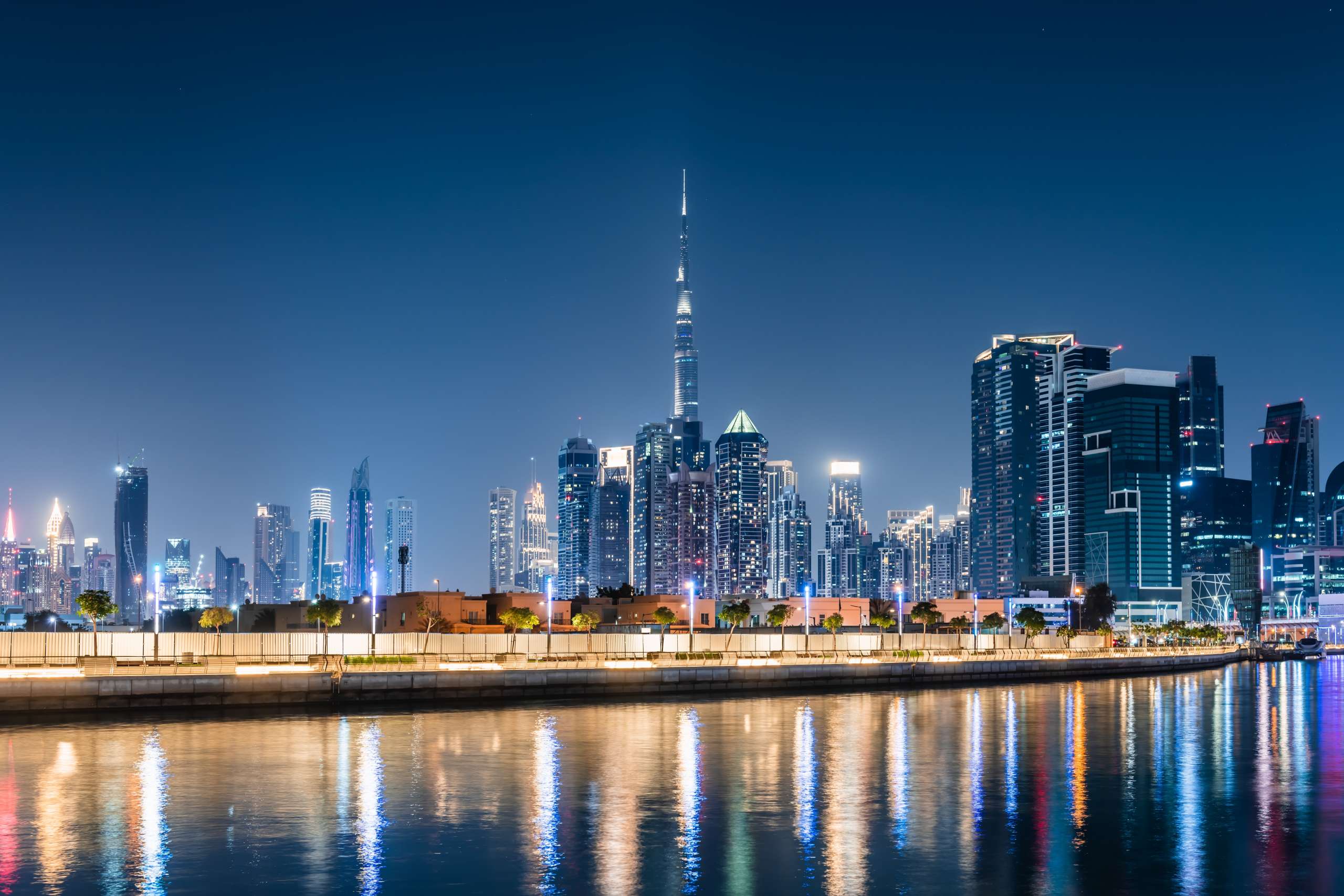
Dubai DIFC Foundations: A Wealth Planning Tool for Global Families in 2026
Dubai’s DIFC Foundations Gain Relevance for Global Wealth PlanningAs international families build wealth across multiple countries, asset protection and succession planning are becoming more complex. Many families now hold real estate, investment portfolios, private company shares and business interests across several jurisdictions.Without a proper structure, transferring these assets between generations can become costly, fragmented and difficult to manage.This is where DIFC Foundations are becoming increasingly relevant. A DIFC Foundation is a separate legal entityestablished within the Dubai International Financial Centre. Unlike a traditional trust, the Foundation can own assets directly in its own name, offering families clearer governance, better transparency and a structure that is easier to administer.For globally mobile families, this structure can help consolidate ownership of international real estate portfolios, private company shares, investment assets, intellectual property and other family assets under one vehicle.Why Families Use DIFC FoundationsThe main appeal lies in succession planning, asset protection and long-term family governance. By using a DIFC Foundation, families can reduce probate and inheritance complications while creating a clearer framework for preserving wealth across generations.For Muslim families, DIFC Foundations can also support Sharia-sensitive succession and governance objectives. The Foundation Charter and By-Laws can be tailored to reflect the family’s values, wishes and inheritance philosophy, while still benefiting from DIFC’s internationally recognised legal framework.Typical setup costs may range from USD 8,000 to USD 20,000, with annual administration and maintenance costs often ranging between USD 3,000 and USD 10,000. These structures are generally most suitable for families with investable assets of at least USD 1 million, with stronger value for portfolios above USD 3 million to USD 5 million.OutlookIn 2026, wealth preservation is no longer only about investment returns. For global families, the priority is structure, continuity and control.DIFC Foundations are likely to remain an important planning tool for families seeking long-term certainty across multiple markets and generations.Download to see insights from other country marketsDownload
3 July

Canada Property Market July 2026: Stability Improves as Buyer Confidence Returns
Canada Housing Market Shows Improving StabilityCanada’s housing market continued to stabilise in May 2026, with buyer activity gradually strengthening across many regions. Lower borrowing costs, improving affordability and stronger homebuyer confidence supported greater market participation during the spring season.Nationally, conditions remained relatively balanced. Inventory levels continued to give buyers ample choice, while home prices generally stayed below year-ago levels. This helped keep affordability in focus and prevented competition from rising too quickly.However, tightening supply in selected markets and improving sales activity suggest that Canada’s housing market may be moving closer to equilibrium.Toronto Gains Momentum, Vancouver Remains BalancedThe Greater Toronto Area showed stronger momentum in May. Home sales increased 6.3% year-on-year to 6,583 transactions, while new listings fell 18.9% compared with May 2025.Even as market conditions tightened, buyers still benefited from softer pricing. The MLS® HPI Composite benchmarkwas down 6.7% year-on-year, while the average selling price reached $1,069,700, down 4.6% from a year earlier.In Metro Vancouver, the market remained more balanced. Residential sales totalled 2,150 transactions, down 3.5% year-on-year, while new listings declined 7.6%.Inventory remained elevated, with active listings more than 34% above the region’s 10-year average. The benchmark price for all residential properties stood at $1,100,700, down 6.2% year-on-year, giving buyers more selection and keeping price growth contained.OutlookCanada’s housing market is expected to move toward steadier conditions in the coming months. If buyer demand continues to recover and supply tightens further in key cities, price declines may moderate.For buyers, the current market still offers choice and negotiating room. For sellers, improving activity is positive, but realistic pricing remains essential.Download to see insights from other country marketsDownload
3 July

Cambodia Property Market July 2026: Stabilising Market Points to Selective Growth
Cambodia Property Market Moves Into a More Disciplined PhaseCambodia’s property market in mid-2026 is showing signs of stabilisation, but recovery remains uneven across different segments.Headline prices are still correcting. The National Bank of Cambodia’s residential price index fell 3.67% year-on-year in January 2026, after a 3.8% decline in 2025. Phnom Penh recorded a sharper fall of 4.52%.However, the market is not moving in one direction. The borey landed housing segment remains one of the most active areas, supported by a growing middle class and better financing access. At the same time, the high-end Phnom Penh condo market showed some recovery in late 2025, with average prices rising around 5% to above US$2,800 per square metre in Q4.Cambodia also remains relatively affordable compared with other Southeast Asian capital-city markets, while rental yields are holding at a realistic 6% to 8% range.Infrastructure and Logistics Support Long-Term DemandThe strongest growth drivers are now linked to infrastructure and real economic activity.The launch of Techo International Airport in September 2025 has redirected Phnom Penh’s expansion southward, while areas connected to Ring Road 3 and the new airport have seen land values rise sharply over the past decade.The industrial and logistics sector is also performing strongly, supported by regional supply-chain diversification. Meanwhile, the deferred 20% capital gains tax on immovable property until 1 January 2027 gives sellers a clear window to transact under the current tax regime.OutlookCambodia’s property market is unlikely to see a broad-based surge in the near term. Instead, growth is expected to be gradual, disciplined and highly segmented.Affordable and mid-range properties in infrastructure-linked areas should outperform, while oversupplied luxury condos may remain challenging. For patient investors, 2026 presents a value-oriented entry window, especially in landed housing and growth-corridor land.Download to see insights from other country marketsDownload
3 July

Australia Property Market July 2026: Housing Momentum Slows as Buyers Gain More Choice
Australia Housing Market Slows in May 2026Australia’s housing market showed clearer signs of slowing in May, with Cotality’s national Home Value Index remaining flat. The data suggests that momentum is easing across most regions as buyers face affordability pressure, tighter borrowing capacity and broader demand-side challenges.The slowdown was most visible in Sydney and Melbourne, where dwelling values fell by 0.9% and 0.8% respectively over the month. Both cities are now below their recent market peaks recorded in November last year. The ACT also softened slightly, with values down 0.2%.However, the market remains highly uneven. Perth and Darwin recorded the strongest monthly gains at 1.5%, followed by Brisbane and Hobart at 0.9%, and Adelaide at 0.5%.Cotality Research Director Tim Lawless noted that Australia’s housing market is moving at different speeds. Over the past five years, Perth home values surged 91.4%, while Melbourne rose only 3.3%, highlighting the gap between stronger and weaker city markets.Sales activity is also cooling. National home sales over the past three months were estimated to be 2.2% lower year-on-year and 4.1% below the five-year average. Sydney and Melbourne recorded the sharpest annual falls in sales, down 17.0% and 14.2% respectively.OutlookLooking ahead, Australia’s property market is expected to remain selective rather than broadly weak. Cities with stronger population growth, tighter supply and better affordability may continue to outperform.For buyers, rising listings and softer auction clearance rates could create more room to negotiate. For sellers, realistic pricing will be increasingly important as market conditions become more balanced.Juwai IQI Newsletter July 2026 RDownload
3 July

Juwai IQI Global Real Estate Newsletter for July 2026
Global Property Markets Show Mixed but Active MomentumThe July 2026 Juwai IQI newsletter shows a global property market that remains active, but increasingly selective. Investors are still moving, yet affordability, financing costs and policy changes are shaping decisions across key markets.Australia remained firm in May, with national home values up 0.5% monthly and 2.3% annually. Perth continued to lead, recording a strong 1.5% monthly gain, supported by tight supply and steady demand.In Italy, residential prices rose 5.2% year-on-year, while sales increased 4.4%, led by Milan, Rome and Turin. Investment volume also rose sharply, reflecting renewed interest in prime and energy-efficient assets.Vietnam recorded roughly 12% year-on-year price growth in Q1 2026, supported by strong GDP growth and disciplined selling. In the Philippines, industrial and logistics demand remained one of the strongest themes, with investment pledges up 27% year-on-year.Capital Flows, Buyers and Policy ShiftsCross-border capital remains important. The newsletter notes that Chinese buyers are still Australia’s No.1 foreign buyer group, with Australia ranking first by both investor count and approved investment value.Policy is also influencing investor behaviour. Greece retained its position as the world’s No.1 destination for global wealth for the second consecutive year, supported by fast Golden Visa issuance and flexible investment options.Meanwhile, Malaysia’s market is cooling, with the average house price projected at RM507,533 in Q1 2026 and quarterly growth forecast at -0.6%, signalling a more cautious environment for speculative pricing.OutlookThe second half of 2026 will likely favour markets with clear demand drivers, limited supply and strong rental fundamentals. Investors are becoming more careful, but not inactive.For agents, developers and buyers, the key message is clear: data-led decisions, realistic pricing and stronger market positioning will matter more than ever.Discover More HereDownload
3 July

Where to Invest in 2026: Infrastructure, Stability and Real Demand Lead the Way
Global real estate is entering a more selective phase in 2026. As interest rates stabilise and inflation pressures gradually ease, investors are shifting their attention towards markets supported by infrastructure investment, population growth, and genuine end-user demand. Rather than chasing short-term momentum, capital is increasingly flowing into locations with strong long-term fundamentals.The Middle East Remains a Core AllocationThe Middle East continues to attract global investor interest, particularly in Dubai and Saudi Arabia. Dubai remains one of the world's most liquid international property markets, supported by business migration, population growth, and a favourable tax environment. While price growth is moderating, the market continues to benefit from strong long-term demand.Saudi Arabia also remains a standout market, driven by Vision 2030 reforms, infrastructure investment, and expanding housing demand. Cities such as Riyadh continue to attract both local and international investors as the kingdom diversifies its economy and accelerates urban development.Southeast Asia Benefits from Infrastructure GrowthAcross Southeast Asia, infrastructure remains one of the strongest investment themes. In Malaysia, projects such as the RTS Link, Johor-Singapore Special Economic Zone, and transit-oriented developments continue creating opportunities in well-connected locations.Vietnam is entering a more disciplined market cycle, with investors focusing on quality developments, legally secure projects, and long-term urban growth. Meanwhile, Bali continues attracting investors seeking rental income opportunities, although buyers are becoming more selective as supply increases in certain areas.India Continues to Deliver Long-Term GrowthIndia remains one of Asia's most resilient real estate markets, supported by economic expansion, technology sector growth, and strong domestic demand. Cities such as Bengaluru and Hyderabad continue benefiting from corporate expansion, infrastructure investment, and rising demand for quality residential and commercial properties.The combination of population growth, urbanisation, and increasing institutional participation continues to strengthen India's long-term investment outlook.OutlookThe second half of 2026 is expected to favour disciplined investors who focus on quality assets and market fundamentals. The Middle East offers stability and liquidity, Southeast Asia benefits from infrastructure-led growth, and India continues to deliver strong long-term demand. Across all markets, the strongest opportunities are likely to emerge in locations supported by real economic activity, connectivity improvements, and sustainable population growth rather than short-term speculation.Discover More HereDownload
16 June

